
Virtual reality (VR) is a simulated multisensory experience (visual, auditory, haptic) intentionally designed to engage an individual’s senses (Trost Z. et al., 2021).
It is based on systems capable of recreating three-dimensional, real or imaginary environments in which the user can interact in an immersive way.
Virtual Reality Rehabilitation: benefits and applications
- What Is Virtual Reality Rehabilitation?
- Neuroplasticity and motor learning
- Main clinical benefits of virtual reality
- Applications of virtual reality in musculoskeletal rehabilitation
- Want to know more or receive commercial offers?
What is Virtual Reality rehabilitation?
Virtual reality rehabilitation applies this technology to physiotherapy treatment, with the goal of promoting motor recovery and reducing pain.
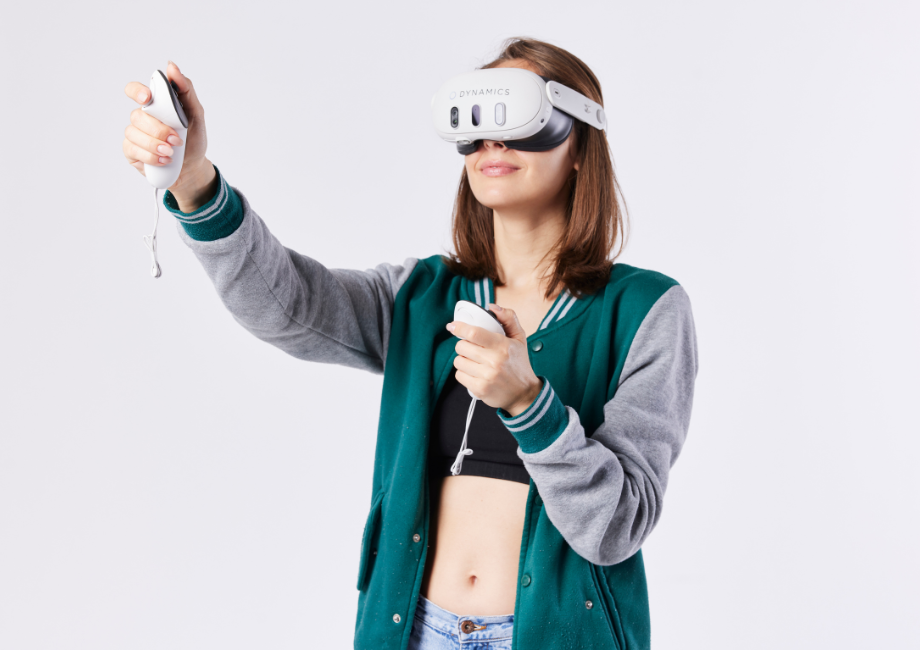
Dedicated software, such as Dynamics VR, allows patients to perform therapeutic exercises in an engaging and controlled environment. During a session with Dynamics VR, the patient’s movements are represented by a digital avatar, providing real-time feedback and high motivational engagement.
Neuroplasticity and motor learning
Immersive virtual reality promotes neuroplasticity through the repetition of intentional movements in a meaningful context. It integrates visual, proprioceptive, and spatial components by activating the mirror neurons.
When patients see an avatar moving as their own body, it facilitates:
- Improved altered body perception;
- Learning of new motor patterns;
- Increased confidence during movement.
Main clinical benefits of virtual reality
- Increased joint range of motion;
- Reduction of kinesiophobia;
- Improved body awareness;
- Enhanced motor performance;
- Exercises in safe and controlled environments;
- Greater therapeutic adherence and motivation.
Applications of virtual reality in musculoskeletal rehabilitation
Immersive virtual reality is effective for patients who need to improve motor function or reduce musculoskeletal pain, especially in conditions such as:
- Neck pain: cervical osteoarthritis, whiplash, herniated cervical disc;
- Shoulder pain: adhesive capsulitis, tendinopathies, post-fracture recovery;
- Low back pain: specific and non-specific low back pain, progressive mobilization programs;
- Post-operative rehabilitation: ACL reconstruction, arthroplasty, fracture rehabilitation;
- Support for invasive therapies: dry needling, neuromodulation;
- Patients with reduced mobility: isometric exercises, sprains with limited weight-bearing, conditions requiring partial immobilization.
For patients with chronic pain or fear of movement, virtual reality enables gradual and controlled exposure, reducing anxiety and perceived pain. Dynamics VR enhances this effect through relaxing environments, music, and positive feedback.
Want to know more or receive commercial offers?
To know more, write at info@easytechitalia.com or call 055 8455216.
Other articles