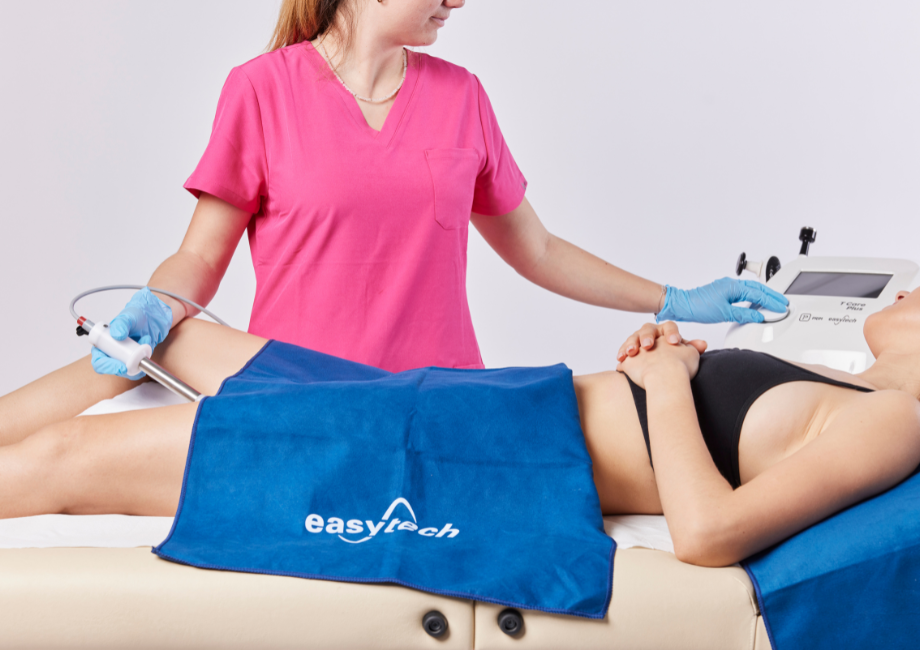
The rehabilitation management of chronic conditions characterised by pelvic pain, such as endometriosis, vulvodynia and vaginismus, requires a comprehensive approach that considers pain, hypertonicity, tissue sensitivity and neuromotor dysfunction. It is possible to personalise treatment and improve clinical outcomes by integrating:
- Ultrasound,
- Electrotherapy and biofeedback,
- Tecartherapy.
Endometriosis, vulvodynia and vaginismus: what they are and why they involve the pelvic floor
Endometriosis: a chronic inflammatory condition characterised by the presence of endometrial-like tissue outside the uterus. It often causes deep pelvic pain, rigidity and myofascial alterations. The pelvic floor can develop hypertonicity and difficulty in relaxation, contributing to the symptoms.
Vulvodynia: chronic vulvar pain, spontaneous or provoked, not attributable to other conditions. It is associated with nervous hypersensitivity and defensive contraction of the pelvic floor.
Vaginismus: a condition characterised by involuntary contraction of the pelvic muscles that impedes penetration. It is often accompanied by fear of pain, marked hypertonicity and difficulty in perceiving muscle relaxation.